
The hedgehog, a slug predator in the garden: should he be feed? How to attract him to your garden ?

What role can hedgehogs play in slug control? How can you attract it to your garden and care for it? Should we feed him? If so, what food should you feed it? How to repel fleas and ticks?
In this article, I try to answer these questions!
If you've discovered my blog, you're probably bothered by slugs and snails.
You'd probably be very interested in the 7 Steps to get rid of slug by attracting the Alpha predator I have designed with the help of Science, and The slug-proof garden Design I have made (with the help of dozens of scientific studies too).
It changed everything for me. I can finally grow lettuces, cabbages, strawberries and cucurbits without pulling the hair out of my head.
Don't hesitate, you'll probably save a lot of time!
Before you start, if you’re interested, here’s the
article on all slug predators
.
I. What role can hedgehogs play in slug management?
a. The hedgehog: what does it eat?
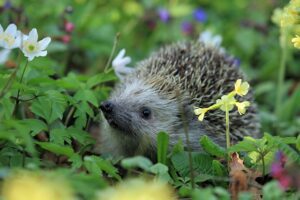
In France, the hedgehogs we see are the common hedgehogs (also known as European hedgehogs).
They are omnivores:
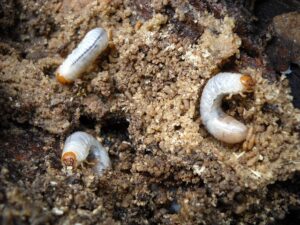
In fact, hedgehogs are mainly insectivores: larvae, beetles, grasshoppers, earthworms, slugs, snails, woodlice, spiders… But mushrooms, ripe berries and fruit that have fallen to the ground, as well as nestlings that have fallen from the nest or broken eggs, are also part of their diet.
b. Do hedgehogs really eat slugs?
It’s sometimes said that slugs aren’t their favorite meal… And they prefer worms, larvae and insects… In fact, let’s just say that these prey are quicker and easier to eat. But slugs are still a choice, protein-rich part of their diet.
Like a great chef, they prepare their dish with passion: they remove the slug mucus, which would tend to complicate their digestion, by rubbing them on the ground with their front paws, before gobbling them up (see video below).
According to some sources, adult hedgehogs are capable of eating up to 10 large slugs in one night!
Because of the variety of its menu, the hedgehog is what we call a generalist auxiliary. Also, because of this varied diet and its reproduction rate, which is much slower than that of slugs, it is more of a protection than a cleaning aid (it contains slug populations in their early stages, and delays a possible explosion of this population).
Here we can see how useful it can be for slug management in the garden. And its presence, combined with that of other predators (as well as the health of other parameters in the garden system), is sometimes necessary for long-term regulation of these slug populations.
II. How to attract a hedgehog to your garden? Habitat and hibernation
a. For hedgehog habitat and hibernation: natural garden design

To help hedgehogs settle into your garden, make sure there are dense hedges in which they can hide. If they’re covered in dead leaves and dotted with thorny thickets (brambles), even better! A thorny hedge of this type is a very good alternative to constructed shelters. This will enable it to take refuge and sleep there between spring and autumn, but it can also hibernate there during the winter. Because yes, hedgehogs hibernate! It may sound obvious when you put it like that, but many people wonder whether a hedgehog hibernates or overwinters?
Wintering simply means spending the winter sheltered from the cold, in a cave or similar. Hibernating animals, on the other hand, allow themselves to enter a state of long-term hypothermia, slowing down their metabolism and thus conserving their energy during periods when food is very scarce!
(End of hibernation parenthesis)
Leave strips of uncultivated grass in the garden (if possible right next to hedges), to attract the many insects it loves! Dead wood on the ground and leaf mats also provide easy access for larvae and worms.
The hedgehog’s territory is very large (3 to 10 hectares!), and it needs passageways through gardens. To achieve this, you can create alternating passages ( holes in the wire mesh, for example) within your fences. Locked in a “watertight” garden, there’s a good chance he’ll let himself die.
b. For hedgehog habitat and hibernation: build or buy a shelter

You can also build him a shelter to keep him snuggled up for most of the day, or to allow him to hibernate to withstand the winter!
To do this, you can first set up a large pile of logs or large stones in a corner of your garden.
Alternatively, you can build or buy a custom-made shelter. Commercially available, these are usually in the form of small wooden “kennels”. But you can also build your own, as shown in the photo below. Inside, lay out a thick carpet of dead leaves – collected in autumn, for example – which, as you’ll have gathered, will delight the plant!

Robin
A passionate experimental vegetable grower, I had huge slug problems during my first 2 years of vegetable gardening.
Nothing (eggshells, ashes, etc.) seemed to work…
And yet, if the Internet was to be believed, everything was supposed to work…
In short, faced with an obvious problem of misinformation, I decided to take action: I tested all the famous “slug barriers”, so as to have a clear mind, and know what to do.
I filmed my (13) tests(here, in French)
The results were crystal clear: nothing was able to effectively block the path of slugs and snails, except Water, usable with trenches at least 5 cm deep and 10 cm wide, or Copper, if used vertically, if its height is at least 7 cm
But a water-based barrier is difficult to implement, and copper is expensive…
It was by turning to scientific studies that I found the solution: adopting a slug predator in the garden, present everywhere in the world, which has a huge regulatory effect on them.
The studies show it. And I called this predator the Alpha predator of slugs.
Using dozens of scientific studies again, I constructed an action plan of the most effective arrangements to attract this Alpha predator to the garden sustainably, and to see it multiply by itself, year after year, season after season.
And to get rid, definitively (and intelligently), of slugs.
I have gathered these 7 steps in a digital book that I propose on this site, and at the end of the book, there is also a video training module on designing a slug-proof garden.
You can find this digital book (which contains all of this) by clicking here.
And what if you don’t get rid of your slugs by following the advice in this book? It’s simple, I will refund you in full (but it will work, if you follow the instructions properly).
So, don’t hesitate to discover the simple 7 Steps that can change your springs.
III. How can we protect endangered hedgehogs?
Unfortunately, hedgehogsare endangered…
For every 100 hedgehogs present thirty years ago, there are estimated to be just 3 today.
Their average life expectancy has fallen from 10 to 2 years.
Only around 4 out of every 1,000 hedgehogs reach the age of 10, and 25% don’t survive from one year to the next.
This is mainly due to the use of pesticides,harmful slug pellets and the disappearance of their habitat.
So how can you help them survive?
a. Those responsible for the progressive disappearance of hedgehogs: exclude all use of pesticides, slug pellets and beer traps.

First of all, you have to exclude all use of pesticides in the garden, but I think this goes without saying if you garden in accordance with permaculture principles. In fact, hedgehogs get poisoned (get sick, then die) by licking themselves after walking through pesticide-treated areas.
Secondly, we must exclude all use of slug pellets, which poison them indirectly (by eating the slugs). What’s more, slug pellets are an impediment to the long-term rebalancing of slug populations in your garden, and their use must be stopped at all costs.
Finally, stop using beer traps. When hedgehogs ingest alcohol-sodden slugs, they end up drunk themselves. This can have a number of consequences: firstly, they can no longer curl up in a ball to protect themselves from predators (badgers, eagle-owls, foxes). Secondly, this state of drunkenness increases their chances of falling into a pool, pond or large puddle, where they could drown.
And anyway, beer traps as a natural way of combating slugs are a bad idea, and I’ve written a specific article on the subject!
b. Why hedgehogs are disappearing: Prevent drowning

As you can see from the graph above, hedgehog deaths by drowning are frequent ! There’s one simple thing you can do to avoid this: if you have a pool or pond with high sides (which they won’t be able to climb over), build them a mini-survival raft on which they can take refugeto avoid drowning after exhaustion. You too can build them an exit ramp!
c. The hedgehog and the dogs

And be careful if you have a dog… it can seriously injure any hedgehog it gets too curious about. If you have a hedgehog that frequently visits you in the garden, bring your dog close to it (by holding it), to explain that it’s not to be touched, and to observe its reactions. If you have a cat, on the other hand, you have nothing to worry about, he won’t harm it, and they may soon be good friends 😉
IV. How to feed a hedgehog? Do we really need to feed it?
As you can see in the graph above, of the causes of hedgehog mortality, 13% of hedgehogs die on average from lack of food. Clearly, feeding them can be very useful!
Yes, but… not just any way.
a. Food for hedgehogs: the importance of time of year

From spring to autumn, it can be very useful to feed hedgehogs from time to time! But don’t let this become too regular, as they may stop looking for their natural food on their own.
In autumn, if you see a hedgehog that still looks small, take a moment to weigh it. If it weighs less than 600 grams, you’ll need to contact a refuge organization (the hedgehog sanctuary or hedgehog hamlet, for example) to take it in during the winter season, when it would be unable to survive being so fragile.
In late autumn, if the hedgehog seems robust and healthy, don’t feed it. Hibernation is triggered by the absence of food and the cold. Feeding him regularly during this period could lead to an imbalance in this area, which would probably prove fatal.
b. Food for hedgehogs: the crucial choice of feed
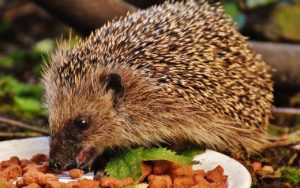
If you want to help a hedgehog through a period of frugality, the only food you can give it is kibble or pate, intended for dogs or cats.
Nothing else! Other types of food you might find in your home are: either fatal for him, or to be given only occasionally, so it’s best not to mention them at all!
And above all, never give them table scraps, milk or bread. They’ll die!
When it comes to feeding a baby hedgehog, I’d advise you to contact a hedgehog sanctuary as soon as possible.
V. How to protect hedgehogs from ticks
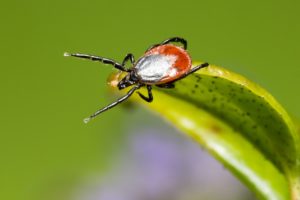
Hedgehogs are adorable little animals, very useful in the garden, but they can also be tick vectors…
Nigella oil (also known as black cumin oil) seems to be highly effective in scaring off ticks and preventing them from biting.
It is used by some gardeners as a dietary supplement (one teaspoon in the morning), which gives an unpleasant odor to their skin, for ticks.
For hedgehogs, you can place a few drops in their shelter, or mix 2-3 drops with their food. It’s apparently very effective!
VI. Four curiosities about hedgehogs

- An adult hedgehog generally has more than 5,000 prickles.
- They have excellent hearing and a very good sense of smell, but rather poor visual acuity.
- They communicate with each other with a wide range of different noises
- When a hedgehog identifies a new scent, it will literally “foam” (secrete a fairly large quantity of foam), then spread the foam produced on its quills. This phenomenon is called self-function.
VII. Other slug management methods
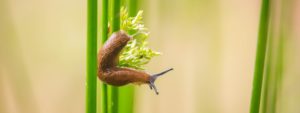
If you’re really being invaded by slugs, and the hedgehogs haven’t arrived yet (or their presence isn’t enough to contain the “invasion”), there are many other avenues you can follow to try and contain these gastropods.
You can set up natural anti-slug barriers, anti-slug mulches, by planting repellent plants nearby, or by attracting other predators of these gastropods, …
But slugs also have several other predators, which you can try to attract: here’s an article that helps to install amphibians in the garden, or an article that helps to attract ground beetles.
Conclusion
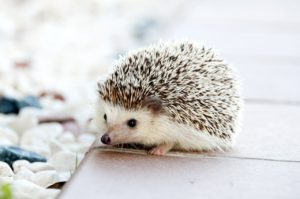
The hedgehog is a generalist protective predator of gastropods. Its presence is one of the ways in which slug populations can be regulated over the long term.
To make the hedgehog feel at home in your garden, you’ll need to build a shelter, learn about the food it needs and protect it as much as possible from danger.
Thank you for taking the time to read 😊, I hope this article has interested you and learned things you think will be useful. Don’t hesitate to let me know what you think in the comments. I’m always interested in what you have to say, as it can only enrich this document. Send me your ideas, and I’ll be happy to complete this article to make it as complete as possible.
References:
http://hameaudesherissons.fr/index.php?id_page=protection.php
https://fr.wikipedia.org/wiki/H%C3%A9risson
Scientific bibliography
Even better! Follow scrupulously these 7 steps 👇
This is the action plan I devised following the findings of dozens of scientific studies on the subject.
I owe the success of my cabbages, salads, strawberries and cucurbits to it.
Click here to find out more:


0 Comments