
A baking soda-based slug repellent ?
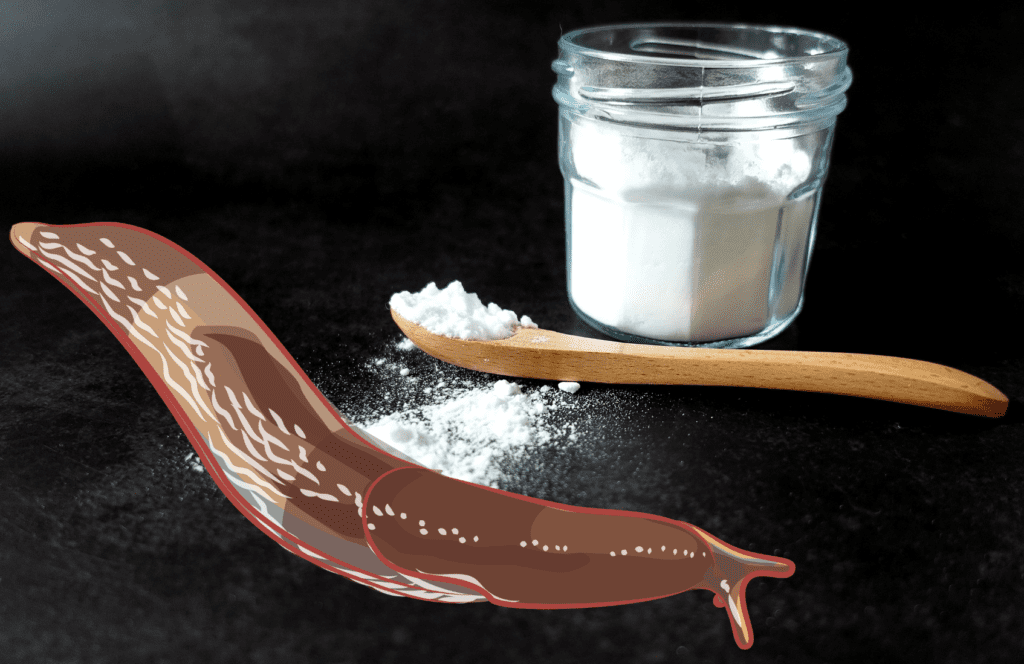
Baking soda is famous for its many uses in the home and garden. Is it also effective against crawling pests? Is it an effective slug killer? How to use it in the vegetable garden? This is what we’re going to detail, point by point, in this article.
If you've discovered my blog, you're probably bothered by slugs and snails.
You'd probably be very interested in the 7 Steps to get rid of slug by attracting the Alpha predator I have designed with the help of Science, and The slug-proof garden Design I have made (with the help of dozens of scientific studies too).
It changed everything for me. I can finally grow lettuces, cabbages, strawberries and cucurbits without pulling the hair out of my head.
Don't hesitate, you'll probably save a lot of time!
Is baking soda effective in keeping slugs away?
I’ve done lots of slug and snail barrier tests (a dozen).
But I didn’t make this one.
To tell the truth, I already know the result: surround a slug with dry baking soda, and it won’t go away.
Because a powdery structure prevents them from passing through. As is the case for fine sand, ash, dry coffee grounds, etc…
But above all, because baking soda, in contact with a slug, is likely to react in the same way as salt (slug dehydration by osmosis).
Sprayed in dilution, it may also keep gastropods away, as salt water would (this needs to be tested).
But while in theory it would probably work, it’s also easy to guess what would happen in a real-life vegetable garden:
- The first possible use (theoretical) would be to surround your plants with a small barrier of baking soda.
- The second possibilitywould be to spray dilute sodium bicarbonate directly onto the foliage of sensitive plants.
–> The problem (only in terms of efficiency, for now), in both cases : when it rains for the first time, the baking soda will be washed away, disappearing into the soil. And I’d bet my forearm that its slug repellent effect would be nil.
I’ll give you, in the 3rd part of the article, alternative solutions that you can use to intelligently repel slugs.
But first, let’s take a look at the other undesirable effects of using baking soda in the vegetable garden.
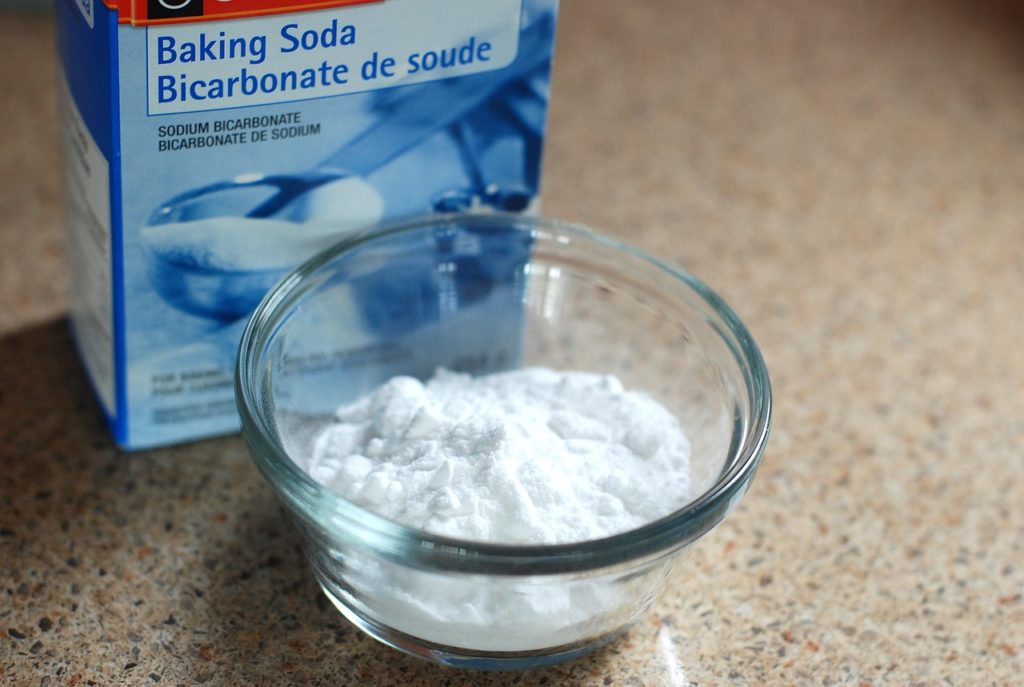
The risks of using bicarbonate in the vegetable garden
In the garden, sodium bicarbonate is a PNPP (low concern natural preparation).
PNPP are substances with phytosanitary value. But unlike PPPs (pesticides), they do not require marketing authorization.
These products are, as their name implies, of “low concern” for health or the environment. Understand that you’re not risking cancer or irreversible environmental pollution by using them in your garden.
Well, I guess that’s what you thought (you brush your teeth with baking soda).
But, is it nevertheless WISHFUL, in order to repel slugs, to put baking soda on your soil? ? For his health (his life), and for your future harvests?
Here’s what the extremely well-sourced Wikipedia article on the subject tells us: baking soda is antibacterial, antimicrobial, antifungal, …
And what’s essential in our soil that keeps it alive, enables it to decompose the organic matter we bring it, and transform it into nutrients that can be assimilated by plants? And create miles of mycorrhizae to help supply plants with nutrients and water?
A host of bacteria and fungi.
- An antibacterial, you guessed it, kills bacteria.
- And an antifungal, as you probably know, kills fungi.
Moreover, in the garden, and as a PNPP product, sodium bicarbonate is mainly used to combat fungal diseasesas a leaf spray.
The Belgian Scientific Institute of Public Health recommends its use against mildew, powdery mildew on vines and apple scab.
Baking soda works mainly by reducing the direct acidity of the surfaces to which it is applied. Mushrooms are particularly fond of acidic environments.
It should be used primarily in a preventive role.
So, to sum up this section Except in the case of a fungal disease identical to one on this list, using baking soda against slugs will have negative effects on the health of your vegetable garden soil, because :
- It will have a negative impact on bacterial life.
- It will be detrimental to fungal life, and therefore to the development of soil mycorrhizae networks.
You get the idea, it’s best to turn to other solutions to intelligently repel slugs and snails.
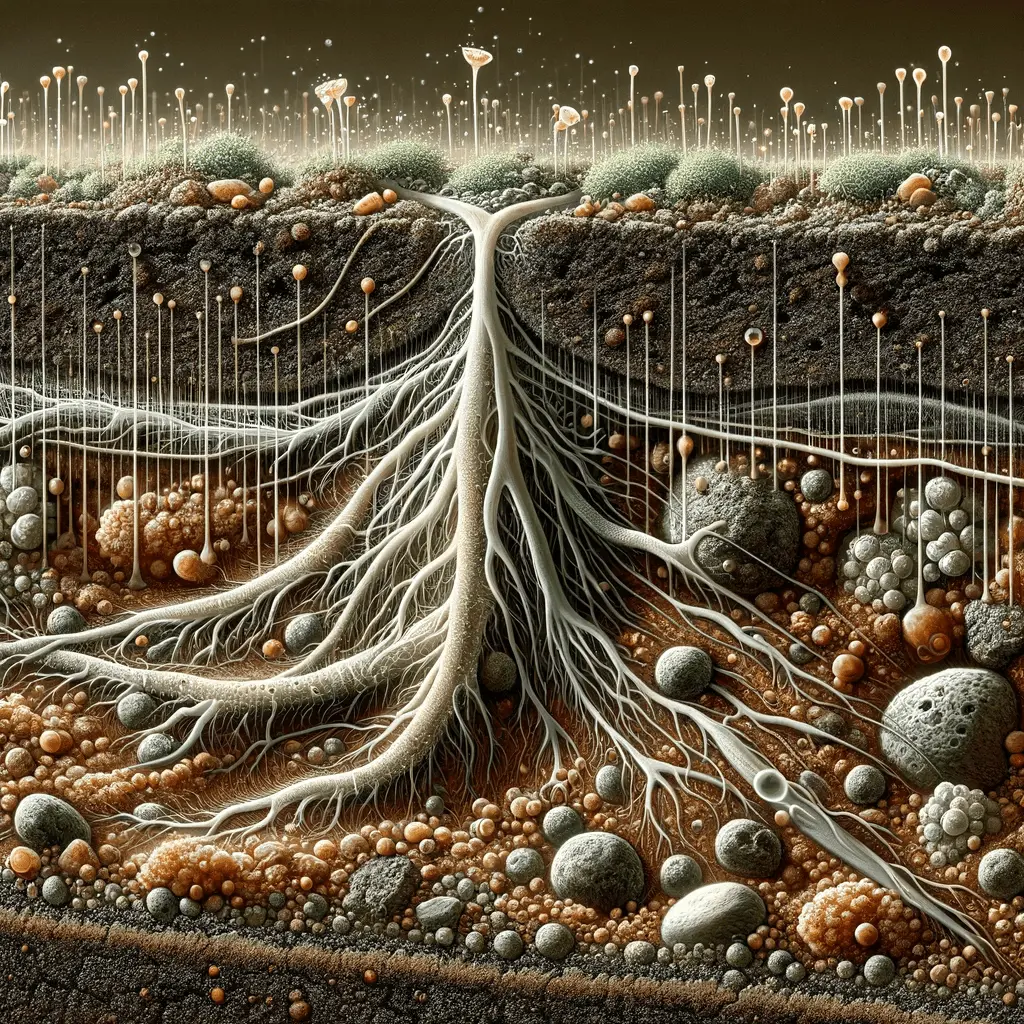
The use of sodium bicarbonate as a slug pellet is detrimental to fungal life in the soil.
Other slug pellets, safe and effective in the garden
So, what are the alternatives to baking soda?
First of all, you should know that the use of slug repellents, or even barriers, should – ideally – only be used in conjunction with a genuine long-term slug control strategy. only be used in conjunction with a genuine long-term slug control strategy.
In simple terms, this long-term strategy consists of 3 main points:
- Attract predators of slugs and snailsYou can attract slug and snail predators by making your garden more attractive to them, and by not killing the slugs – they’re their food, so they won’t settle down if you make them disappear.
- Increase the number of plants of all kinds in your gardenThis will ensure that your cabbages are not left as the only food for gastropods. And, by diluting the predation of the latter, they will be much better off.
- If the slugs are too voracious, use effective anti-slug barriers while waiting for the balance to be restored.
.
At this level, you should know that the plethora of natural barriers (ash, eggshells, coffee grounds, hair, etc.) cited in the majority of articles on the subject are mostly ineffective (permanently) in real-life conditions.
I can tell you this with confidence, because I’ve personally tested them on my YouTube channel here, if you want to see it with your own amazed eyes.
What you’ll see on the channel is that the only two slug barriers that really workare water moats (sufficiently wide, and about 5 cm deep), and copper (used vertically, and more than 7cm high).
- Water barriers can be made more cost-effectively by burying gutters that you’ve been able to collect, and which will fill themselves with water each time it rains.
- Otherwise, if the question of copper you’re interested, I’ve listed and analyzed all commercially available copper barriersto help you make sense of it all.
Even better! Follow scrupulously these 7 steps 👇
This is the action plan I devised following the findings of dozens of scientific studies on the subject.
I owe the success of my cabbages, salads, strawberries and cucurbits to it.
Click here to find out more:

Scientific bibliography
- To find out more about the potential use of sodium bicarbonate in crops :
Zhilong Bie, Tadashi Ito, Yutaka Shinohara,
Effects of sodium sulfate and sodium bicarbonate on the growth, gas exchange and mineral composition of lettuce, Scientia Horticulturae, Volume 99, Issues 3-4, 2004

Robin
A passionate experimental vegetable grower, I had huge slug problems during my first 2 years of vegetable gardening.
Nothing (eggshells, ashes, etc.) seemed to work…
And yet, if the Internet was to be believed, everything was supposed to work…
In short, faced with an obvious problem of misinformation, I decided to take action: I tested all the famous “slug barriers”, so as to have a clear mind, and know what to do.
I filmed my (13) tests(here, in French)
The results were crystal clear: nothing was able to effectively block the path of slugs and snails, except Water, usable with trenches at least 5 cm deep and 10 cm wide, or Copper, if used vertically, if its height is at least 7 cm
But a water-based barrier is difficult to implement, and copper is expensive…
It was by turning to scientific studies that I found the solution: adopting a slug predator in the garden, present everywhere in the world, which has a huge regulatory effect on them.
The studies show it. And I called this predator the Alpha predator of slugs.
Using dozens of scientific studies again, I constructed an action plan of the most effective arrangements to attract this Alpha predator to the garden sustainably, and to see it multiply by itself, year after year, season after season.
And to get rid, definitively (and intelligently), of slugs.
I have gathered these 7 steps in a digital book that I propose on this site, and at the end of the book, there is also a video training module on designing a slug-proof garden.
You can find this digital book (which contains all of this) by clicking here.
And what if you don’t get rid of your slugs by following the advice in this book? It’s simple, I will refund you in full (but it will work, if you follow the instructions properly).
So, don’t hesitate to discover the simple 7 Steps that can change your springs.

0 Comments