
Organic slug pellets: do they really work?

A wide range of slug pellets is available. Some are known to be harmful to the garden and its inhabitants. But other slug pellets are organic. But are they effective against gastropods? And really safe in the vegetable garden? That’s what we’re going to explore here.
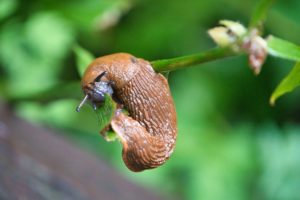
If you've discovered my blog, you're probably bothered by slugs and snails.
You'd probably be very interested in the 7 Steps to get rid of slug by attracting the Alpha predator I have designed with the help of Science, and The slug-proof garden Design I have made (with the help of dozens of scientific studies too).
It changed everything for me. I can finally grow lettuces, cabbages, strawberries and cucurbits without pulling the hair out of my head.
Don't hesitate, you'll probably save a lot of time!
Organic slug pellets: what exactly are we talking about?
In practical terms, all products labelled “organic slug pellets ” are slug pellets containing iron phosphate (or ferric phosphate), which kill the gastropods that consume them.
These pellets have historically been designed as alternatives to metaldehyde-based pellets, which are carcinogenic and have disastrous environmental consequences (decimation of hedgehog populations, danger to pets, pollution, etc.).
Unlike metaldehyde granules, iron phosphate granules can be used in organic farming, and are available for private sale.
In the rest of this article, when I say “organic granules”, I mean “granules suitable for use in organic farming”, and therefore “iron phosphate granules”.
These slug pellets generally contain between 0.8 and 5% iron phosphate. The higher the concentration, the greater the effect on slugs, but the greater the potential impact on the garden – we’ll talk about this later.
To illustrate, here are 3 types of commercial organic granules:
- The first, from Star Jardin, consists of 0.8% ferric phosphate.
- The 2nd, from Solabiol, with 1% ferric phosphate
- The 3rd, from Fertiligène, does not reveal its ferric phosphate concentration.
Do these granules work?
The best way to answer this question is to delve into customer reviews:
On amazon, Star jardin’s organic anti-slug product gets these comments: “fairly effective”, “very effective”, “mediocre effectiveness”, depending on the customer. But the rating of 4.1 out of 5 is very good.
Solabiol’s organic anti-slug product, for its part, received 4 comments, ranging from “works like a charm” and “does the job” to “not effective […] my lettuces paid the price”. The average score of 3.9 out of 5 is also very good.
Fertiligène’s organic anti-slug product receives many positive reviews: “effective”, “hyper-effective”, “very effective”… And only one negative review: “not very effective after a few weeks’ use”. The average score of 4.4 out of 5 is still very good.
In short, does it work? It would seem so, for a majority of customers. Even if these products don’t seem to meet with unanimous approval.
So should you run out and buy some?
Not necessarily. Well, not so fast. And we’ll see why.
The first thing we can say to ourselves is that these customer returns, often requested by the platform 2-3 weeks after buyers have received the product… are often short-term feedback on the product’s effectiveness.
What about after 2 or 3 seasons of use? Are slugs still proliferating in numbers? Are there even more than before? Are these gardeners chained to this repeated solution of eliminating gastropods? What are the possible long-term consequences of using these slug pellets in the garden?
We discuss this in the following sections.
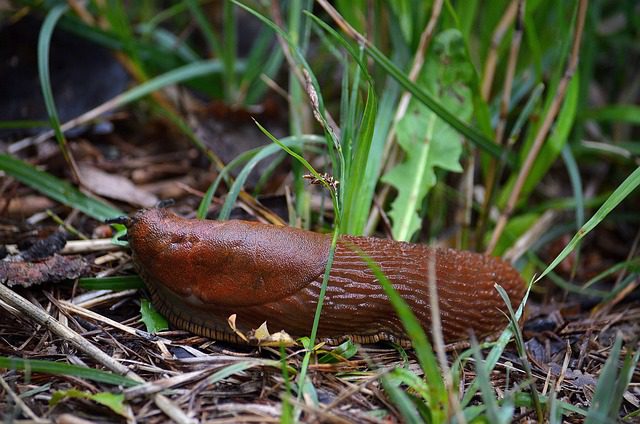
An ideal solution for long-term slug management in the vegetable garden?
Hervé Coves, a specialist in slug management in the garden, puts it so well: “an overpopulation of slugs in the garden is just a symptom”. “The symptom of an imbalance in this garden-system”.
Basically, he explains that if our lettuces, cabbages, strawberries and young cucurbits are decimated by slugs in spring, there’sa problem – an imbalance – in our garden.
Generally, this imbalance stems from two problems:
- A lack of natural predators of gastropods in the garden
- A lack of plant biodiversity in the garden
A lack of predators, because it’s these that will regulate the slug and snail population on an ongoing basis.
It is therefore essential to set up a real garden design strategyFor more information on this subject, you can read my article on the following subjects welcoming slug predators to the garden.
A lack of plant biodiversity, because if your salads get eaten by slugs after winter, it’s often because there’sno alternative food. Installing slug-friendly plants in the garden is an excellent sustainable strategy. For more information on this subject, please refer to my article on
anti-slug plants
.
The attraction of natural predators is absolutely fundamental to the sustainable regulation of the gastropod problem.
But attracting predators becomes impossible if we kill slugs with slug pellets, however organic they may be: predators won’t settle in if they can’t find food.
This point, which is necessary for lasting control of the problem, means letting slugs live in the garden. Killing them every year means seeing them come back, sometimes in greater numbers, every year. Because the garden is even more unbalanced than last year.
Slugs are also an essential link in the balance of a natural ecosystem.
They are to soil what bees are to flowering plants.
Eliminating them intensively is unfortunately the way to an unbalanced garden, far from the permaculture ideal.
And then there’s the question of the potential impact of repeated use of these iron phosphate slug pellets…

Are organic slug pellets safe for the garden?
The packaging of these pellets says they are risk-free.
But, with a little digging, we can begin to have some doubts.
What are the alternatives?
It’s all very well to hope for a lasting solution to the problem…
But today, you’re having all your vegetables eaten!
So it’ s more realistic to have effective solutions right away, while waiting for that famous natural regulation.
Elsewhere, you’ll be told to use beer traps, nematodes and diatomaceous earth.
But, as you can see, these methods are often highly counter-productive, because of the yo-yo effect they create by killing gastropods.
To move towards complete and lasting control of a slug problem in the garden, we need to turn to methods aimed at protecting our crops WITHOUT killing the slugs (so that their predators can find them, and therefore settle in the garden).
How do you do it?
With barriers that slugs can’t get through. And with which to surround the sensitive plants in your vegetable garden.
At this point, forget eggshells, ashes, brambles, fine sand, … And other
grandmother’s remedies
.
It doesn’t really work and/or doesn’t last. You’ll need to keep an eye on your plants at all times.
To prove my point, you can watch my slug barrier test videos on my
my Youtube channel
.
In fact, only two barriers are truly effective against slugs:
- Water-filled trenches, rather like moats. They must be sufficiently wide (at least 10 cm) and sufficiently deep (at least 5 cm). You can use recycled gutters, which you bury in the ground and fill up on their own every time it rains. We’ll have to surround the vegetable garden with these moats of water. Then remove the slugs from the area in question, until there are none left.
- Copper, used vertically, height > 7 cm: this is one of the most effective slug barriers. This is because copper, when it comes into contact with a slug’s mucus, generates a slight electric current, which is very unpleasant for gastropods.
Here you can see my
comparison of commercial copper slug fences
Even if it’s not an impenetrable barrier, you can also opt for a an effective, free and easy-to-install method: “gift barriers”, i.e. barriers that attract and fix slugs, to prevent them from attacking your plants: a good solution is the use of
surface composting.
Even better! Follow scrupulously these 7 steps 👇
This is the action plan I devised following the findings of dozens of scientific studies on the subject.
I owe the success of my cabbages, salads, strawberries and cucurbits to it.
Click here to find out more:

Bibliography
- (1) Moussa, S. B., Mahmoud, H. A., El-Naggar, A. H., & Sakr, S. A. (2018). Effects of ferrous and ferric phosphate on survival, reproduction, and behaviour of the earthworm Eisenia fetida. Chemosphere, 206, 321-329. doi: 10.1016/j.chemosphere.2018.04.142.
This study, published in 2018 in the scientific journal “Chemosphere”, examined the effects of iron phosphate on earthworm survival, reproduction and behavior. The results showed that exposure to high levels of iron phosphate led to a decrease in earthworm survival and reproduction.
- (2) Kumar, A., Elmer, W. H., Schröder, P., & Lanno, R. (2014). “Iron phosphate toxicity to earthworms and effects on associated ecosystem services.” Ecotoxicology and Environmental Safety, 107, 46-53.
This other study, published in 2014 in the journal “Ecotoxicology and Environmental Safety”, also examined the effects of iron phosphate on earthworms. The results showed that exposure to high levels of iron phosphate led to changes in earthworm behavior and physiology, as well as negative effects on their growth and survival.
- W.E. Gavin, G.W. Mueller-Warrant, S.M. Griffith, G.M. Banowetz,
Removal of molluscicidal bait pellets by earthworms and its impact on control of the gray field slug (Derocerus reticulatum Mueller) in western Oregon grass seed fields, Crop Protection, Volume 42, 2012
This study shows that iron phosphate granules gradually disappear from the spreading surface as they are carried away by earthworms. One interpretation is that earthworms are attracted to these granules, and feed on them. Combined with the previous studies, it seems easy to imagine the reality of the impact of iron phosphate granules on earthworms.

Robin
A passionate experimental vegetable grower, I had huge slug problems during my first 2 years of vegetable gardening.
Nothing (eggshells, ashes, etc.) seemed to work…
And yet, if the Internet was to be believed, everything was supposed to work…
In short, faced with an obvious problem of misinformation, I decided to take action: I tested all the famous “slug barriers”, so as to have a clear mind, and know what to do.
I filmed my (13) tests(here, in French)
The results were crystal clear: nothing was able to effectively block the path of slugs and snails, except Water, usable with trenches at least 5 cm deep and 10 cm wide, or Copper, if used vertically, if its height is at least 7 cm
But a water-based barrier is difficult to implement, and copper is expensive…
It was by turning to scientific studies that I found the solution: adopting a slug predator in the garden, present everywhere in the world, which has a huge regulatory effect on them.
The studies show it. And I called this predator the Alpha predator of slugs.
Using dozens of scientific studies again, I constructed an action plan of the most effective arrangements to attract this Alpha predator to the garden sustainably, and to see it multiply by itself, year after year, season after season.
And to get rid, definitively (and intelligently), of slugs.
I have gathered these 7 steps in a digital book that I propose on this site, and at the end of the book, there is also a video training module on designing a slug-proof garden.
You can find this digital book (which contains all of this) by clicking here.
And what if you don’t get rid of your slugs by following the advice in this book? It’s simple, I will refund you in full (but it will work, if you follow the instructions properly).
So, don’t hesitate to discover the simple 7 Steps that can change your springs.

0 Comments