
Carabid slug predators: how to attract them to your garden?
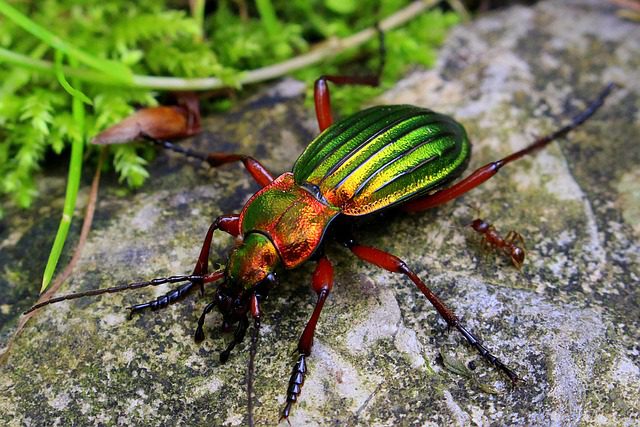
“It’s all very well working on a slug management device, Mr Robin Springday, but Nature knows how to deal with the problem herself!”
Exactly!
And do you know how?
Not least because of the natural attraction of predators, when prey is plentiful!
I’ve already written about hedgehogs, amphibians and leopard slugs…
What about carabid beetles?
Carabid beetles are soil predators specialized in predating slugs and snails (they have even developed a special hunting technique).
As with hedgehogs and amphibians, knowing how to design your garden to attract and accommodate ground beetles is a big plus in helping to regulate the slug populations that swarm there in spring.
In this article, I’d like to introduce youto carabid beetles and where they live, and show you how to design your garden accordingly. I’ve also included a little video-devinette, which you can show to your friends to see if they know anything about life in their garden.
One last thing: did you know that the presence of ground beetles in the garden reduces the proliferation of often invasive weeds?
Here we go!
If you've discovered my blog, you're probably bothered by slugs and snails.
You'd probably be very interested in the 7 Steps to get rid of slug by attracting the Alpha predator I have designed with the help of Science, and The slug-proof garden Design I have made (with the help of dozens of scientific studies too).
It changed everything for me. I can finally grow lettuces, cabbages, strawberries and cucurbits without pulling the hair out of my head.
Don't hesitate, you'll probably save a lot of time!
Before you start, if you’re interested, here’s the
article on all slug predators
.
I. The carabid beetle: introducing a slug predator
1. A little information about carabid beetles, for starters
The ground beetle is a predatory soil insect, active mainly at night.
It hunts in low vegetation.
Its family (the Carabidae) comprises over 40,000 different species!
In France, the golden carabid and the wood carabid are the most common (according to some sources), but there are dozens of different species: moreover, the not-so-obvious anatomical differences between each species can make identification difficult. It’s easy to make the mistake of associating every specimen with a golden sheen with the “golden carabid” (carabus auratus), and every “dull” specimen with the “wood carabid” (carabus nemoralis).
The presence of the carabid beetle was judged to be a good indicator of the biodiversity of the environment where it is observed. If you have any in your garden, that’s a good sign!
Two super sources for identifying different species of carabid beetles:
- Here is the dedicated page of a website, where you will find the different species of French carabid beetles:
https://www.insectes-net.fr/carabus/carabus3.htm
(I advise you to go to “return to carabus menu” for an overview.
- Here is a pdf of carabid identification from CNRS and INRA:
identification carabes
(for north-west France, but very interesting in any case)
Another little tidbit: carabid beetles have two development cycles:
- There are spring beetles: adults mate in spring, then lay eggs and give birth to larvae during spring and summer, and the larvae become adults at the end of summer.
- And then there are the summer beetles: adults mate in summer, lay eggs in autumn, give birth to larvae and transform into adults in spring.
Summer carabid beetles have a development cycle that coincides very well with the peak of spring slug populations.
Carabid beetles have an average lifespan of 2 to 3 years.
A video showing several species of carabid beetles:
2. What do beetles eat?
The vast majority of carabids are carnivorous. The adult is fond of slugs and snails, but not only… (aphids, insect eggs, larvae, worms, springtails, ants, spiders, etc.). The larva feeds on insect eggs, larvae, worms and small insects. Diets can vary from species to species. The golden beetle, for example, is the only species to attack CPB larvae.
For those who doubt that carabid beetles love slugs, take a look at the video below!
Carabid beetles use their mandibles to kill and crush their prey. They then inject them with a liquid rich in digestive enzymes, the purpose of which is to pre-digest the prey before ingestion.
The carabid beetles most specialized in hunting gastropods have a very specific attack technique: they immobilize the slug by biting it, thus preventing it from producing the mucus it needs to defend itself.
Carabid beetles feed abundantly, as they need to consume their weight in food every day! There’s nothing like a good orange slug to settle their stomachs 😉
Some species of carabid beetle(Harpalus spp. for example) are granivores, and this is also of great interest in organic farming (more on that later!).
3. Carabid beetles as an effective biological weed control agent
A joint study by INRA and BBSRC indicates that the presence of granivorous carabid beetles in cultivated fields is an effective way for farmers to control the development of “weeds”.
The carabid beetles of this species seem to have a preference for the seeds of plants considered by farmers to be “weeds”, plants which therefore compete with cultivated plants on the plots.
As each granivorous carabid consumes from one to several dozen seeds a day, the loss of seeds due to predation by a population of carabids would be 50%, which is enormous.
Intelligent management (and above all, preservation!) of granivorous carabid beetles near cultivated areas is proving to be a very interesting alternative to herbicides, which are still all too often used.
If you are interested in finding out more about this subject, here is a 2-hour thesis presentation on the subject of weed seed regulation by carabid beetles (I confess I didn’t see it all):
II. How to attract the carabid beetle to your garden to control slugs?
1. Where do carabid beetles live?
Carabid beetles live mainly under tree bark, wood debris, stones, dead leaves, in hedges or in branches.
In winter, they hibernate in the warmth of a stump or embankment.
Carabid beetles have a “ base camp “, from which they sometimes travel several dozen meters (up to 70 m for the golden carabid, for example) to hunt.
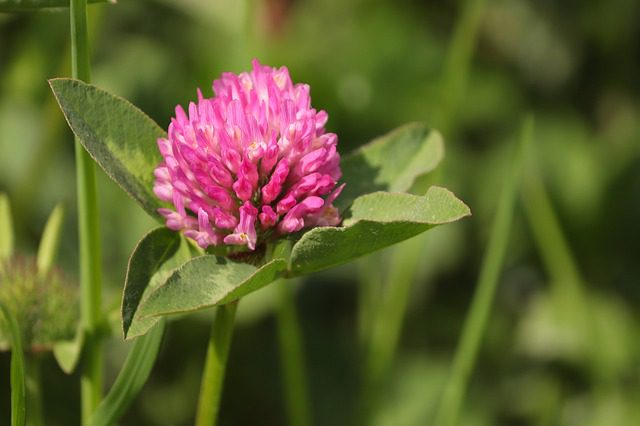
Beds of low vegetation, as mentioned at the start of this article, are their main hunting ground (they mainly prey on soil insects). For this reason (and perhaps for other reasons, but it’s not clear), beds of purple clover seem favorable to its presence.
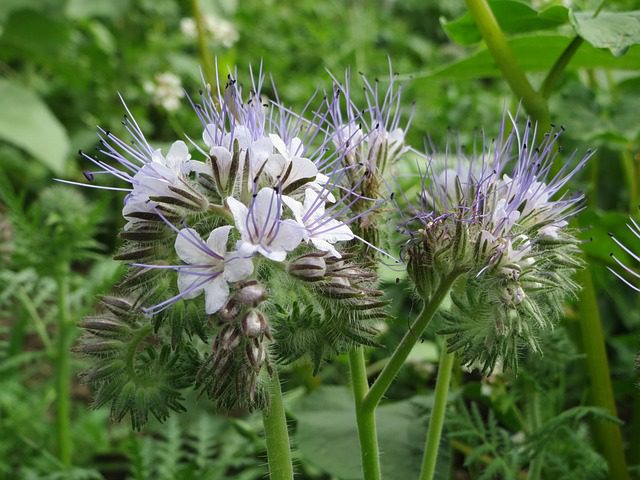
Phacelia beds, for reasons that are not entirely clear, also seem to attract them.

Robin
A passionate experimental vegetable grower, I had huge slug problems during my first 2 years of vegetable gardening.
Nothing (eggshells, ashes, etc.) seemed to work…
And yet, if the Internet was to be believed, everything was supposed to work…
In short, faced with an obvious problem of misinformation, I decided to take action: I tested all the famous “slug barriers”, so as to have a clear mind, and know what to do.
I filmed my (13) tests(here, in French)
The results were crystal clear: nothing was able to effectively block the path of slugs and snails, except Water, usable with trenches at least 5 cm deep and 10 cm wide, or Copper, if used vertically, if its height is at least 7 cm
But a water-based barrier is difficult to implement, and copper is expensive…
It was by turning to scientific studies that I found the solution: adopting a slug predator in the garden, present everywhere in the world, which has a huge regulatory effect on them.
The studies show it. And I called this predator the Alpha predator of slugs.
Using dozens of scientific studies again, I constructed an action plan of the most effective arrangements to attract this Alpha predator to the garden sustainably, and to see it multiply by itself, year after year, season after season.
And to get rid, definitively (and intelligently), of slugs.
I have gathered these 7 steps in a digital book that I propose on this site, and at the end of the book, there is also a video training module on designing a slug-proof garden.
You can find this digital book (which contains all of this) by clicking here.
And what if you don’t get rid of your slugs by following the advice in this book? It’s simple, I will refund you in full (but it will work, if you follow the instructions properly).
So, don’t hesitate to discover the simple 7 Steps that can change your springs.
2. Garden design to attract carabid beetles
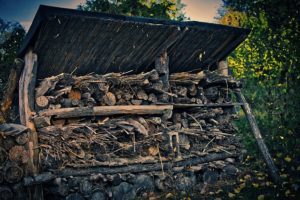
If you want to attract ground beetles to your garden (to help regulate slugs, for example), it’s best not to have a garden that’s “too clean” (as with attracting most insects and animals). Piles of wood or branches, dead leaves, old stumps, or stony corners will do them a world of good. A hedge lined with fallen leaves at the base is a very good start, and one that most insects and animal helpers enjoy. Insect shelters with large cavities in direct contact with the ground can also provide good shelter.
Keep vegetation low and rarely mown, and the carabid beetles will fall in love with you and your garden.
Plant beds of red clover and phacelia, and they’ll make you a religion.
Don’t forget that allowing slugs to live in your garden is also essential to their presence: predators are attracted by prey, and the presence of continuous food makes a favorable place to settle (a “base camp”).
3. What to avoid when attracting carabid beetles to your garden
Be careful, landscaping is great!
But you also have to be careful not to harm them in other ways.
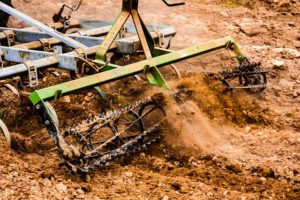
One very important thing is to avoid ploughing the soil with modern, destructive machinery, as the ground beetle is often found there too.
The second important thing is to ban the use of beer traps. Apart from the fact that they are counter-productive to the sustainable resolution of a slug population, the smell of (drowned) slugs attracts carabid beetles, and it’s not uncommon for carabid beetles to fall into the beer container and drown.
These precautions plus the above-mentioned measures will make your garden a veritable Eden for carabid beetles :p
III. Apart from the appeal of natural predators, what other solutions are there for intelligent slug control in permaculture?
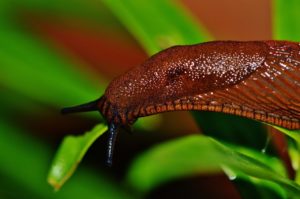
Attracting slug predators, as mentioned in this title, is one of the first steps towards this natural regulation of the problem. The key is to let the slugs live in the garden, to attract these predators naturally.
Be careful not to confuse natural predators (
hedgehogs,
amphibians
carabid beetles) and adopted predators (
Indian racing ducks
, nematodes) (click on the predator to access the article in question), which do not naturally participate (in these proportions) in the ecosystem, and whose presence prevents the installation of natural predators (very unfavorable competition for food, as these predators are real weapons for exterminating slugs, but also (for the Indian racing duck) other insects).
The second point is the choice of appropriate plants when designing the garden: I’ve written a series of articles on this subject, which you can easily find by browsing my site.
The third point is to give the garden time to “age”, generally speaking (for “young” gardens), and for the soil fungi to develop.
Regarding slug barriers, they are most of the time completely ineffective (read my other articles if you want to be able to believe me with certainty).
Even better! Follow scrupulously these 7 steps 👇
This is the action plan I devised following the findings of dozens of scientific studies on the subject.
I owe the success of my cabbages, salads, strawberries and cucurbits to it.
Click here to find out more:

Conclusion:
Increasing the overall biodiversity of your garden can often prevent many of the problems caused by small “pests”.
This is also the case for slugs, and the attraction of their natural predators is a very good way of achieving lasting control of a slug problem.
The carabid beetle is a famous slug predator, and its presence in a permaculture garden is truly a blessing.
In this article, we’ve looked at some of the small changes you can make to your garden to attract them and encourage them to settle in.
In the hope that this will help you to gradually understand the interdependencies that exist within our little garden-systems, and why not also move one step closer to finding a lasting solution to your slug problems!

0 Comments