
Homemade slug pest control with white vinegar: recipe, effectiveness and method of use
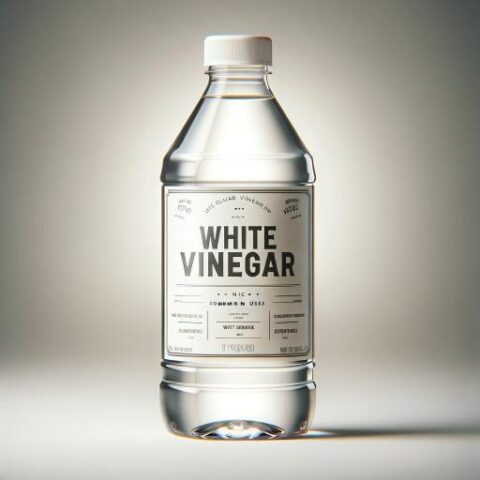

In this article, the aim is to take an intelligent look at a famous slug repellent: white vinegar.
We’ll look at how white vinegar can be used as a slug pellet (I’ll give you a recipe), its advantages and limitations, and the precautions to be taken when using it. Finally, we detail how to use white vinegar to repel slugs inside the home, as well as the risks associated with its use in the garden.
If you've discovered my blog, you're probably bothered by slugs and snails.
You'd probably be very interested in the 7 Steps to get rid of slug by attracting the Alpha predator I have designed with the help of Science, and The slug-proof garden Design I have made (with the help of dozens of scientific studies too).
It changed everything for me. I can finally grow lettuces, cabbages, strawberries and cucurbits without pulling the hair out of my head.
Don't hesitate, you'll probably save a lot of time!
Traditional slug control methods
Traditional slug control methods include the use of chemical products such as slug pellets based on ferric phosphate. These methods are often harmful to the environment and can have consequences for human and animal health (metaldehyde), or are potentially risky (ferric phosphate).
Another famous way to keep slugs at bay is to use natural barriers: ash, eggshells, coffee grounds, etc.
Unfortunately, these “grandmother’s methods” have shown serious concerns about their effectiveness in tests under real conditions of use, as can be seen in the video in this comparison of natural anti-slug products.
Another solution is to use a copper barrier, which has
has proven to be effective
as a slug barrier.
So today we’re asking the question: could white vinegar be a very economical way of repelling slugs?
White vinegar: an economical alternative
Composition and properties of white vinegar
White vinegar, also known as spirit vinegar, is a colorless, acidic liquid composed of water and acetic acid. It is commonly used in household chores for its cleaning and degreasing properties. And it’s easy to buy in any grocery store.
Benefits of using white vinegar as a slug pest control product
Slugs don’t like to come into contact with surfaces wetted with white vinegar. Here’s a
scientific evidence of the effectiveness of white vinegar on slugs
. Note that the study was carried out on snails, and that the behavior of slugs is very similar to that of snails. This study highlights the strong repellent power of acetic acid, the main component of white vinegar.
So, in certain cases (more on these later), this product can create a barrier to slugsprotecting certain targeted areas.
Sprayed directly on slugs, white vinegar can even kill slugs. But there’s little point in doing this, and it’s not necessarily desirable (for you, as well as for them ;)).
Plus, spirit vinegar is very inexpensive, readily available and safe for humans and pets (unlike slug pellets). for humans and pets (unlike slug pellets).
How white vinegar works on slugs
White vinegar acts on slugs by modifying the pH of their environment. Slugs have sensitive skin and their bodies are covered with a thin layer of mucus that protects them from dehydration. The acidity of white vinegar corrodes the mucus and alters the pH of the slug’s skin.This should give them a burning sensation, and keep them away from the treated area.
As mentioned above, white vinegar can even kill slugs if they are in prolonged contact with the product, or even if it is poured directly onto them.
Recipe for effective homemade slug pest control using white vinegar
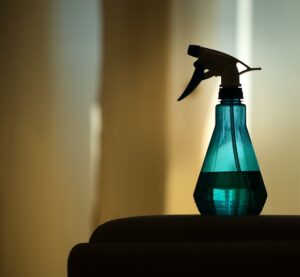
Here’s a recipe for making your own homemade slug pellets, using white vinegar. :
Materials and “ingredients” required:
- Hand spray
- Water
- White vinegar
Preparation:
- Fill hand sprayer halfway with white vinegar
- Fill the rest of the spray tank with water (this gives a 50/50 dilution).
- There you go!
Using your white vinegar-based slug pest control product
Using white vinegar in the home
Method of use
Many people are surprised to see slugs appearing regularly slugs regularly appear inside their homescrawling across their floor tiles.
Hmm, what a pleasure, what a joy!
The problem in this case is that most slug control solutions (designed for gardens) are very difficult to apply (if not totally inapplicable) in this context.
For example, I find it hard to see how you could use
slug bareer in this context. Or slug pellets. Or natural barriers.
On the other hand, a repellent wetting agent, such as white vinegar, is ideal Simply spray the recipe described above on the areas where you regularly see slugs: they often come from outside, sneaking in through tiny cracks, and this product will very probably make them want to get in.
Effective, and safe for you and your pets.
Frequency of use
Your white vinegar recipe will not be effective until it has evaporated completely..
Let’s just say it will be very effective as long as the surface – on which the vinegar has been sprayed – is still wet.
And that it will be relatively effective as long as the surface in question is still sufficiently fragrant (even once it’s no longer wet).
Using white vinegar to repel slugs in the garden and vegetable patch
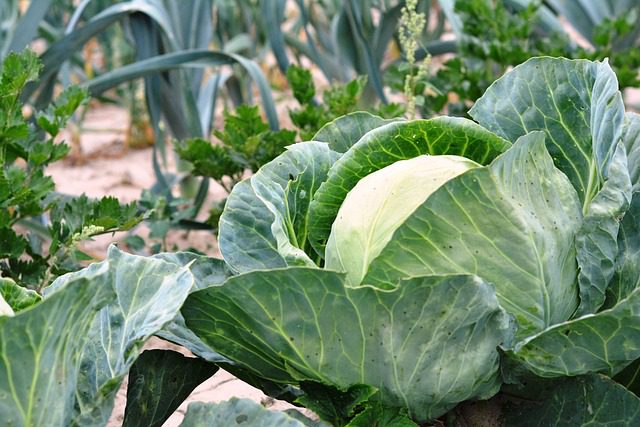
Can it be used as a barrier around plants?
What about a garden?
Hmm, it gets complicated.
White vinegar could have been used, why not, as a slug pellet around the plants, by spraying the soil.
The problem is that, by doing this, you’re going to seriously disrupt, even kill, a large part of your soil’s life Bacteria in particular, which can’t tolerate acidity and are the main contributors to soil fertility.
In short, there’s no point in protecting your plants from slugs if you’re going to destroy the fertility of your soil.
What about sprinkling white vinegar on plants?
Is white vinegar harmful to plants?
The short answer: yes, white vinegar is harmful to plants. Whether sprayed directly onto plants, or at their base.
Why is white vinegar harmful to plants?
It is harmful to their feet indirectly, according to the same explanation as for the previous part: it kills the bacteria responsible for soil fertility. Soil fertility, which serves to “feed” the plant, providing it with the nutrients essential for growth.
On leaves, its high acidity (pH 2.5) can disrupt plant cell membranes (which make up their vegetation, including their leaves). Repeated exposure of plants to white vinegar can lead to their progressive death, or major developmental problems.
And, as white vinegar requires regular spraying (as it evaporates and is washed away), plant exposure – for effective protection against slugs – is bound to be long and extensive. This idea should be avoided.
And then, as the slightest rain washes the vinegar off the foliage, it enters the soil, ruining its fertility.
In short, white vinegar to repel slugs is not for use in the vegetable garden.
Conclusion
White vinegar is a very useful slug killer in the homeFor people who see slugs appearing in their garden (it’s much more common than you’d think): it’s a very inexpensive product, easily accessible, and highly effective against slugs, thanks to its high acidity. And then, to my knowledge, there is no better alternative in this type of setting.
However, white vinegar white vinegar should not be used as a slug killer in the vegetable garden It is highly detrimental to soil fertility (as it kills the bacteria responsible for soil fertility), as well as to the plants to which it is applied.
Even better! Follow scrupulously these 7 steps 👇
This is the action plan I devised following the findings of dozens of scientific studies on the subject.
I owe the success of my cabbages, salads, strawberries and cucurbits to it.
Click here to find out more:

Bibliography :
In this study, we see the strong repellent effect of acetic acid, one of the main components of white vinegar. This study was carried out on snails, and their behavior is very similar to that of slugs.

Robin
A passionate experimental vegetable grower, I had huge slug problems during my first 2 years of vegetable gardening.
Nothing (eggshells, ashes, etc.) seemed to work…
And yet, if the Internet was to be believed, everything was supposed to work…
In short, faced with an obvious problem of misinformation, I decided to take action: I tested all the famous “slug barriers”, so as to have a clear mind, and know what to do.
I filmed my (13) tests(here, in French)
The results were crystal clear: nothing was able to effectively block the path of slugs and snails, except Water, usable with trenches at least 5 cm deep and 10 cm wide, or Copper, if used vertically, if its height is at least 7 cm
But a water-based barrier is difficult to implement, and copper is expensive…
It was by turning to scientific studies that I found the solution: adopting a slug predator in the garden, present everywhere in the world, which has a huge regulatory effect on them.
The studies show it. And I called this predator the Alpha predator of slugs.
Using dozens of scientific studies again, I constructed an action plan of the most effective arrangements to attract this Alpha predator to the garden sustainably, and to see it multiply by itself, year after year, season after season.
And to get rid, definitively (and intelligently), of slugs.
I have gathered these 7 steps in a digital book that I propose on this site, and at the end of the book, there is also a video training module on designing a slug-proof garden.
You can find this digital book (which contains all of this) by clicking here.
And what if you don’t get rid of your slugs by following the advice in this book? It’s simple, I will refund you in full (but it will work, if you follow the instructions properly).
So, don’t hesitate to discover the simple 7 Steps that can change your springs.

0 Comments